We’ve all been there. It’s a busy morning, time seems to fly, someone can’t find their sweater, breakfast is half-finished, and everyone is trying to get out the door on time. Before the day has even really started, stress can already creep in.
When we hear the word routine, it’s easy to imagine something rigid or overly strict—something that takes the fun out of family life. But in reality, a kids daily routine is much closer to a rhythm than a rulebook.
A simple, predictable routine helps anchor the day. It brings calm to busy moments, reduces daily power struggles, and gives children a reassuring sense of structure. Most importantly, it helps them feel capable.
Instead of constant reminders like “Did you brush your teeth?” or “Did you check your backpack?”, routines gently shift responsibility to the child: “I checked my list. I’ve got this.”
Let’s explore how a family routine at home can support independence, confidence, and connection—without pressure, perfection, or guilt.
Table of Contents
Why daily routines matter for kids
Between the ages of 4 and 9, children are learning who they are and what they can do on their own. They crave autonomy, yet still rely on adults for emotional safety and guidance. A predictable routine bridges that gap beautifully.
Here’s why routines are especially helpful at this stage.
Building independence in kids
When children know what comes next, they don’t need constant instructions. A routine becomes a guide they can follow independently—whether it’s getting ready in the morning or winding down at night.
This sense of “I can do it by myself” builds confidence and reduces daily friction for everyone.
Teaching responsibility—gently and naturally
Routines help children understand simple priorities: we take care of our responsibilities before moving on to play or screen time. This isn’t about strict discipline. It’s about learning cause and effect in a supportive, age-appropriate way.
Over time, small daily actions—brushing teeth, checking homework, tidying up—turn into healthy habits.
Growing confidence and self-assurance
There is something powerful about a child being able to say, “I did it all on my own.” Completing a checklist or daily routine gives children a sense of accomplishment and pride.
They begin to see themselves as capable members of the family, which lays the foundation for long-term self-confidence.
Creating emotional safety
The world can feel big and unpredictable for young children. A consistent home routine offers a sense of stability. Knowing that meals, bedtime, or story time happen in a familiar way helps children relax and feel secure.
This emotional safety reduces anxiety and makes transitions easier—especially after long school or daycare days.
Keep it simple, flexible, and playful
A routine should support your family, not control it. The goal isn’t perfection—it’s flow.
Make it visual
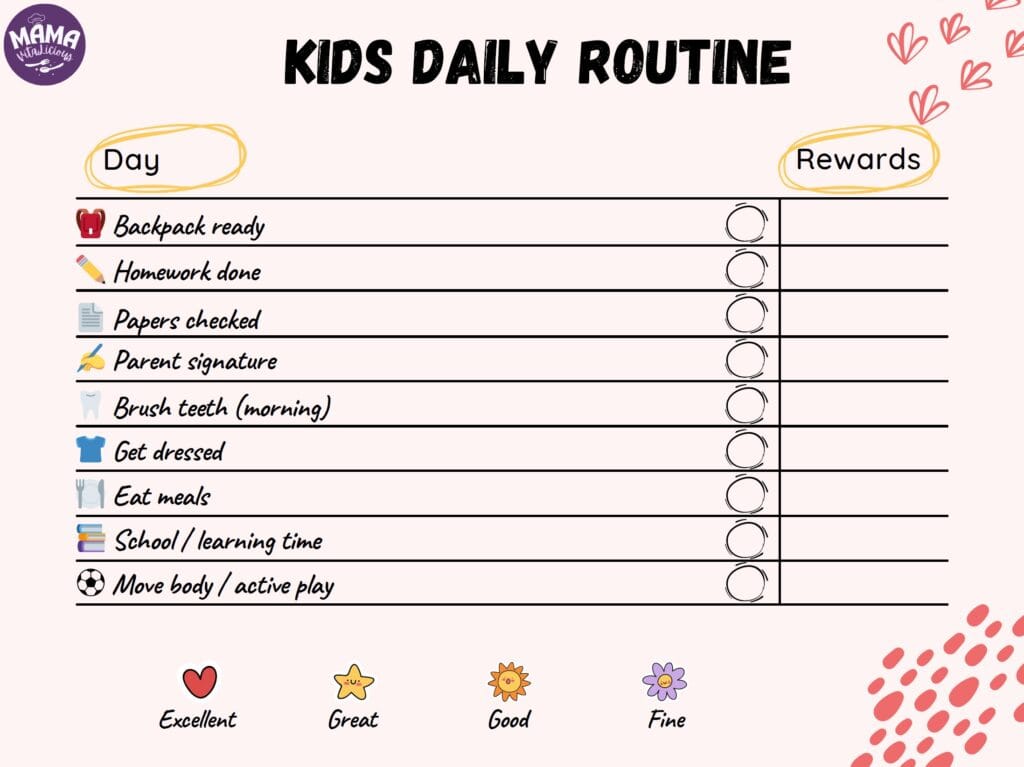
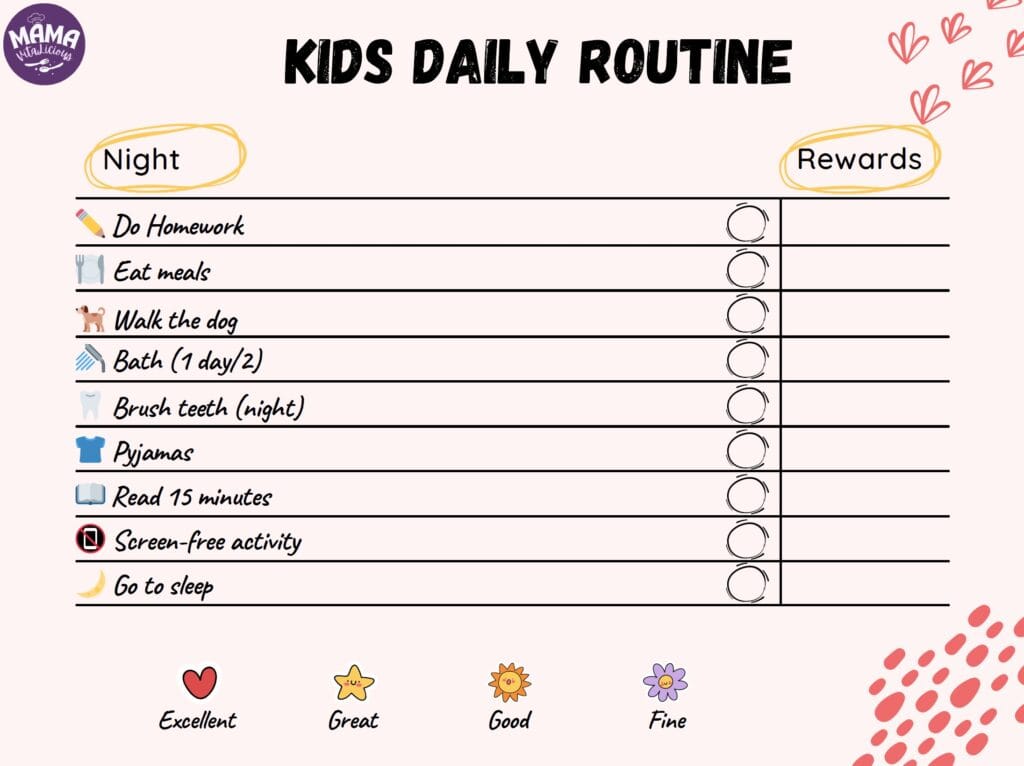
Children respond best to visuals. A simple chart with pictures (toothbrush, book, bed) helps them understand and remember the routine. Let them decorate it or choose the colours—it increases ownership and motivation.
Turn tasks into games
Daily responsibilities don’t have to feel boring:
- Beat the timer: Can you get your pyjamas on before the song ends?
- Checklist challenge: How many checkmarks can you get today?
- Sock-matching challenge: Who can find the most pairs?
Leave room for real life
Some days are busier than others. Someone gets sick, plans change, or everyone is simply tired. That’s okay. A routine is a helpful tool—not a rigid rule.
If a day doesn’t go as planned, simply return to your rhythm the next day. As your child grows, your routine can (and should) evolve with them.
Simple daily checklist for kids
You don’t need a complicated system. In fact, fewer items often work better. This simple checklist is designed to support independence, self-care, and family connection—without overwhelming your child.
You can print it, use it on a whiteboard, or turn it into a visual chart.
Daily responsibilities & self-care
- Check school documents (and see if anything needs to be signed)
- Homework given by the teacher (even 10 minutes counts)
- Eat meals (ideally sitting down, without screens)
- Brush teeth (morning and night – 2 times per day)
- Go to bed at a consistent time
Personal care
- Wash or bathe (every other day is usually enough at this age, unless it was a very active day)
Calm & learning moments
- Read or listen to one story
- Screen-free activity (drawing, building, playing outside, board games)
Family & connection time
- Choose one family activity:
- Dance together to a favourite song
- Cook or prepare a meal together
- Fold and organize clothes using a fun challenge
- Call grandparents or relatives (especially if they live far away—turn it into a mini game or challenge)
Tips for parents to make it stick
Let children check items themselves
Giving your child the marker or letting them place a sticker makes a big difference. If they forget something, try asking, “What does your checklist say?” instead of reminding them directly.
Celebrate effort, not perfection
Messy folding? Toothpaste cap left open? Focus on the effort first. Habits come before technique.
Adapt to your family rhythm
There is no one-size-fits-all routine. Maybe baths work better in the afternoon. Maybe mornings are calmer when backpacks are packed the night before. The best routine is the one that fits your family’s reality.
Start small and focus on connection
You don’t need to change everything at once. Start with one part of the day—like bedtime or the morning routine—and build from there.
At the heart of every kids daily routine is connection. It’s not about checking boxes—it’s about creating calm moments where your family can slow down, laugh, and enjoy being together.
Why not print the checklist and look at it with your child tonight? Ask them which parts they feel ready to do on their own. You may be surprised by how eager they are.
Ready to print? Click here
Ready to print? Click here
Other articles you may be interested in!
Your brain’s best friend: Lifelong language learning benefits
How screens affect eating habits in kids & adults
Silly & Fun Games : Unleash your inner clown
Frequently Asked Questions
Do children really need a strict daily routine?
No! The goal is not strictness—it’s consistency and predictability. A flexible routine gives children a sense of safety while allowing for life’s natural changes (sick days, special events, tired mornings).
What if my child refuses to follow the daily routine?
Start small and celebrate effort. Let your child check items themselves and focus on positive reinforcement. Over time, they will naturally adopt the routine because it helps them feel capable.
How long should a daily routine take?
It depends on your child and family rhythm. A full day checklist covers key responsibilities, self-care, and family time, but individual tasks may take just a few minutes. The focus is flow, not timing.
Can daily routines change with age?
Absolutely. Children grow quickly, and their abilities and needs change. Adjust the checklist and activities to match their independence and interests.
Do routines work for weekends or holidays?
Yes, but with flexibility. You can keep core activities like meals, hygiene, and family time, while allowing more freedom for fun activities or special outings.
What if my child forgets tasks?
It’s normal. Gently guide them by asking, “What’s next on your checklist?” rather than scolding. The goal is learning responsibility, not perfection.
Should daily routines include screen time?
Ideally, limit screen time and prioritize offline activities—reading, crafts, outdoor play, or family games. You can schedule small screen moments once core routines are done.
How do I make the daily routine fun?
* Use stickers, checkmarks, or small rewards.
* Turn chores into games (“beat the timer,” “sock matching challenge”).
* Let children decorate their checklist to increase ownership.